Playing our way back to connection

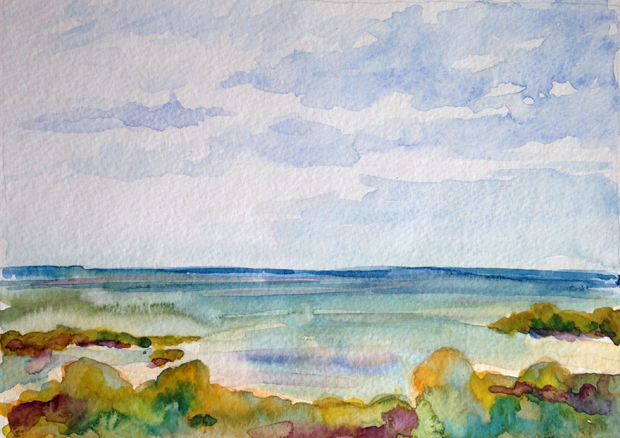
1998_8.6_Edisto-Jeremy_Cay_620w

A wise teacher advises in times of uncertainty to turn to activities that go back generations deep. Ancient activities like walking, or storytelling around a fire, or cooking, or hugging, can be very grounding. These basic actions remind us of our humanity, of our animal nature, and our belonging.

To that list, I would add feeling and expressing emotion. We have been conditioned to push emotion away as wrong, unseemly, embarrassing, toxic, dangerous, imposing, selfish, anti-social — there are any number of labels the ego likes to have at the ready. Last night, I discovered an excellent way to practice emotions: improv class. Continue reading →

You get what you’re available for

2014_7.13_2_620w

You get what you’re available for.

This advice, given to me by a wise elder years ago, has been echoing in my mind lately. Originally, I understood it in reference to meditative experiences or attempts to enter alternate reality, and it strikes me now that it has a much wider application.

Last night, I had the experience of handling a situation of conflict differently, and with surprising results. During dinner, my husband and son got into a disagreement over something that seemed trivial to me, but felt important to each of them. Neither was willing to come back together, to drop his stance and reconnect. By some miracle, I could see clearly how much they both yearned for connection, yet their pride wouldn’t allow it. Continue reading →

Climate change invites story change

2009_7.17_Brewster_620w

In twenty years as a self-declared “green” architect, I’ve worked with many clients to focus on their values and priorities. No one project can do everything, because no budget could withstand it, so we have to choose between goods: certified wood or radiant floor heat, composting toilets or bamboo floors or solar panels. These are not apples-to-apples decisions, so prioritizing is done within the context of big-picture values and vision.

One thing I’ve always emphasized is energy efficiency, partly because it’s the easiest sell — when your finished building uses less energy, you save money — but mostly for its direct link to greenhouse gas emissions and climate change. Of course, when I got into this gig two decades ago, there was a very different story about climate change than there is now. Continue reading →

Recasting economics for 7th-graders and everyone else

2014_7.3_620w

One thing that’s helping me live into new stories is to question received information and to seek out wiser voices, especially those who bring a perspective that goes beyond the our human-centric world. Sometimes that takes the form of a weekend retreat in the woods, a chance to literally get away from “civilization.” At others, it means challenging a “that’s the way we’ve always done it” mentality.

Recently, I was helping my seventh-grade son study for an upcoming economics test, quizzing him on the definitions he had carefully written in his notebook. I was becoming uneasy, tempted to tell him that it’s all just a construct, one way of viewing the world and of organizing materials, systems, and people to fit that view. Here’s what his notes said next to the word “Economics,” which stood out in bold red: Continue reading →

On trauma, simplicity, art, healing, and love

2014_8.28_620w-2

A useful practice for living into new stories is to pay attention to themes or patterns that show up, especially coming from different directions and sources. Lately, I’ve been encountering the theme of healing trauma — in podcasts, conversations with friends, dreams, memories, and articles. It started with Bessel van der Kolk’s interview on “On Being,” describing his research into using yoga to train and improve people’s “heart rate variability,” which greatly improves resilience in the face of trauma. This work is groundbreaking in treating PTSD.

In a webinar I watched yesterday, he spoke about how profoundly interconnected we are as a species, that emotions ripple between us and into our bodies whether we’re aware of it or not. He showed two slides of a mother and baby monkey. In the first, both mother and baby are calm. In the second, the mother is agitated and screeching, the baby looks terrified and stressed out. I found myself thinking of my own childhood, steeping in my mother’s anxiety, depression, and (as the psychologists call it) hyper-arousal. Continue reading →

Dr. King and the hero’s journey of freedom

Since today is Martin Luther King Day, I wanted to share one of the greatest speeches by a great role model for living into the New Story of connection and belonging. In this speech, King sets a high bar for our nation:

“I have a dream that my four little children will one day live in a nation where they will not be judged by the color of their skin, but by the content of their character.”

Continue reading →

The divinity of the speck

2000_LightInAutumn_602w_2

This guest post is by Phila Hoopes. You can read a bit about her on the “Denizens” page.

A few months ago, in a storm of grief over the way the world is going, I wrote to author/teacher/medicine woman Deena Metzger, “Knowing what you know, being sensitive to all you perceive, how do you not despair?” She answered: “Because I know that Spirit exists and that some of us are being guided and so we are doing what we are called to do and that has to be sufficient. And because — I don’t want God to despair too.”

I have shied away from those words; their challenge was too devastating. I’ve buried myself in purposeful overwhelm, busybusybusy applying my skills to good causes, and when fatigue forced a halt, burying myself in lesser distractions – conversations with friends, an old movie, a brain-candy novel, surfing the Internet. Checking the stats for this blog, frustrated that no inspirations were coming for new content (surprise!) and bemused that the most popular page, by far, was Quotes on the Dark Night of the Soul. Refusing to admit – despite all indications – that I was (unadmittedly, only borderline-consciously) traversing a similarly shadowed valley. Continue reading →

Storying our way to vibrant communities

Shoes_620wOften, the things I think I’m seeking in life are already present, so close I’m not even aware of them. Like the fish not recognizing the water it swims in. I may jump on a particular bandwagon, like longing for “community,” as a sort of magic talisman that’s going to right the sinking ship of modern civilization, only to be shown, in beautifully concrete ways, that it’s right here, all around me.

Last night, my next-door neighbor and I were both coming home late from meetings. He stopped while closing his front gate to call a hello through the darkness and ask if I was all right. Then he said, “Did you hear about R?” (Our 55-year-old across-the-street neighbor had just informed my husband a few days before that he’d had a heart attack in mid-December, necessitating shunt surgery. It was the first we’d heard about it.) Continue reading →

Glaciers are the canary in the global coalmine and oh what a song

Balog glacier_620w

It could be argued that art is the best medium for revealing relationships between humans and nature, for reminding us that such relationships even exist. My son and I just watched the stunning 2012 documentary, “Chasing Ice.” We’d heard about it from a photographer we met while on a boat trip in Glacier Bay, Alaska

The film follows photographer James Balog’s single-minded passion and tenacity in conducting the Extreme Ice Survey (EIS). Once he got the idea to set up cameras to watch glaciers in Iceland, Greenland, Alaska, the Rockies, Canada, and other harsh environments, he was launched on an odyssey of art, technology, engineering, mountaineering, and endurance. Continue reading →

Another way to heal the illusion of separation

2012_9.8_620w

The poet and essayist Mark Nepo shares a teaching from the Tao that “the world in all its mystery and difficulty cannot be improved upon, only experienced.”

“Ultimately, we are small living things awakened in the stream, not gods who carve out rivers. We cannot eliminate hunger, but we can feed each other. We cannot eliminate loneliness but we can hold each other. We cannot eliminate pain, but we can live a life of compassion.”

I like the humility of this, the recognition that we are not at the center of it all; we are merely players in the great drama of life. While it may be a comedown for some, it certainly takes the pressure off. We don’t have to control and orchestrate everything after all. What happens when we surrender to the truth of this? Continue reading →