About julie@goforchange.com

Julie Gabrielli is fascinated by the power of story to heal, reconnect, and create our world. She has logged years of dedicated studentship and mentorship through work as an architect. She also uses writing, painting and film to explore the threshold between damaging cultural stories and emerging new narratives. Her Restorying retreats offer a place to listen for and experience our inherent belonging and connectedness. Parenting used to be her most humbling activity until she started writing a novel.

Thatching our way to a new story of relationship

Polly house compositeI made these sketches for my longtime collaborator and friend, Polly Bart. After a couple of decades as a green builder, she is building a house for herself using all natural and salvaged materials, including trees harvested from her land, strawbale walls, a green roof, and—possibly best of all—a thatched roof over the main living room’s steeply pitched log structure. Last month, the master thatcher came from Ireland to put up the roof. The photos of it are stunning. (Scroll down this post for a slideshow of six images, or follow this link for more.)

This morning, I awoke from a dream of her roof, thinking about the differences between a roof like this and conventional construction. Modern construction technology favors industrial materials put up in layers, each with its specialized purpose: structure, enclosure, water shedding, waterproofing, insulation, and to bridge and/or seal thermal movement of the different materials. Thatch, by itself, takes care of all of those purposes save the structure. Great skill and long training are required to do it correctly. Continue reading
Step into the flow and speak up

2009_8.26_Yosemite2_620w-2Instead of resolutions, each year I listen for the words or phrase that will guide me. Last year, the words were trust, magic, and play. I appreciated the guidance of these words, which reminded me to trust that everything is unfolding according to a secret order, and to appreciate the presence of magic in the ordinary. Instead of deadly seriousness, playful trickster energy helps to stay fresh and present, to navigate even the most challenging moments.

In the dark days of the winter solstice, I was guided to step into the flow, and recognized that this is my phrase for 2016. I love the fluidity of it, the invitation to get up off the bank and wade right in to the moving water of life. I have a lifelong habit of observing from the sidelines so this is an invitation to get into the game, engaging with the mystery of unknowable outcomes. Continue reading

A year of new stories, part 2

8.2.15_Hawk Cove_620wFrom lazy days of summer, watching sunsets and traveling to other places, to the wrenching events of the fall, one theme kept emerging. We have the power to tell our own stories. We can see the tumult and suffering of our times as an open invitation to reclaim that power.

In July, I speculated on why artists create, given how much work it is to make anything, whether it’s a building or a novel. We do what it takes to serve the muse.

“The act of writing is an act of optimism. You would not take the trouble to do it if you felt it didn’t matter.” ~ Edward Albee

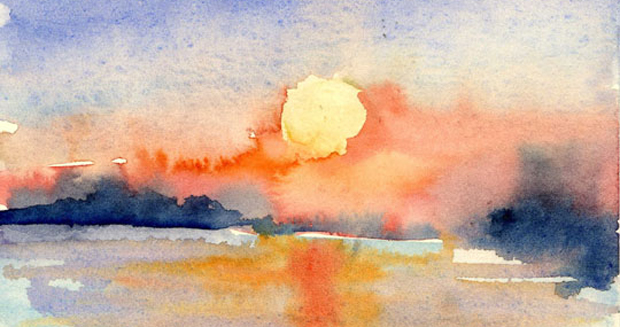
In August, a sunset worked its magical way through my imagination and onto the page as a timeless reminder of the ephemeral. Continue reading

A year of new stories, part 1

Omega lake_97_640w

“A talent for speaking differently, rather than for arguing well, is the chief instrument of cultural change.” ~ Richard Rorty

This is the time of year for highlight lists. I thought about doing a best of Thriving on the Threshold list for about a minute. Instead, I’m offering a two-part look back on some of the themes that emerged this year. Visually, the site’s tag cloud indicates that the top themes are interdependence, mystery, wonder, humility, creativity, imagination, separation, uncertainty, magic, and beauty.

I use my writing to increase my awareness of the stories that we live by. This post presents a list of some of those stories, both the dominant ones and emerging alternatives. Cultivating that awareness involves “re-membering,” literally returning to the original home of the body, as in this post. And the way that appreciation, wonder, awe and gratitude arise from such re-connection. Continue reading

Birdcages, surfing and armor: on tapping the power of interconnectedness

2014_7.14_620wA few years ago, pondering my tendency to give in to fear, I got this image of my life as a birdcage. My body is the cage, the beautiful bird in the cage is Spirit, Unity, pure consciousness. As long as the cage is uncovered, the bird will sing and sing. My ego is the blanket that I throw over the cage, especially when I grow fearful of the song or can’t imagine how it can fit or direct the living of my life. Of course the cage is completely porous between inner and outer worlds. What happens when I open the door and let the bird fly out? What happens when I become the bird and fly to meet my fellows?

A dear friend who had recently come through a difficult period strenuously advised not to become the bird, and certainly not to leave the cage. Rather than paraphrase her words, here is what she wrote:

There is so much to chew on, but we are of matter. Of humanity. I think I tried to fly as they say. . . and in the end, I found out that I’m still just human. And we are connected. So my question is: how do we connect and fly together? Connect those dots. It seems to me, from a consciousness perspective, we all need to lift off together. Continue reading

The farmer, the artist and the light and dark side of creativity

11.7.15_Horse_620w

Why don’t we go to the American Visionary Art Museum more often? It’s so full of energy and inspiration. The artist biographies alone contain worlds: stories of modest lives, of strange and average families, of being marginalized or anonymous or defying odds. And the art! Inspiration, desperation, madness, direct divine download, obsessive detail, love, beauty and hope. The human condition and human potential laid bare—and then bedazzled with mirror fragments, ceramics, jewels, beads, day-glo paint, and silver balloons. The whole messy reality of life as an embodied human.

AVAM is a funhouse of play and whimsy and joy-in-the-face-of . . . . I used to naively believe that such playfulness and inspired creativity was the reserve of a select few Chosen, and that they get to shine more brightly and be more loved than the rest of us. Of course, such artists experience the other extremes of despair, darkness, and depression more acutely too. There is no free lunch. Continue reading

We are all blind men describing an elephant

Climate_hoax

I had an exchange on social media after the Paris climate talks, a back and forth of articles and videos with an acquaintance who challenged the veracity and conclusions of what’s known as “accepted” climate science. I let myself be annoyed by his posts, dismissing them as straw men. (The book and film, “Merchants of Doubt,” shows that many of them are). Among the challenges to climate science, the one I find most absurd is that scientists are after big government grants, so they’ll say anything. It’s just not persuasive when you consider that it’s usually leveled by those who DO have a financial stake—like the Koch brothers and others in the fossil fuel biz.

Then I had to laugh. Here I was defending science, when I’m more inclined to question its assumption of human exceptionalism and elevation of reason to exalted status over intuition. Rupert Sheldrake’s book, Science Set Free, shows that modern science, for all its value and rigor, has gotten so dogmatic as to be almost fundamentalist in its stridency. Anything that doesn’t fit the accepted paradigm of materialism is ignored, dismissed, and labeled “anti-science.” Data that doesn’t fit the expected outcome is shoved into a file drawer and not published. Continue reading

Ask Edith: feeding the wolf

Dear Edith,

I’m shocked that in this day and age you’re actually advising people to send their kids outside. Continue reading

Ask Edith: Nature Deficit Disorder

Dear Edith:

My 8-year-old son has recently been diagnosed with Nature Deficit Disorder. I should have seen it coming, as earlier in the year he sprained both thumbs playing video games. Continue reading

Ask Edith

GOWatercolor_crop

Tomorrow we will debut a new feature on the blog, called “Ask Edith.” I don’t think Edith would mind if I told you I was a bit skeptical when she first approached me. Sure, she’s credentialed* to give advice, but during each of our seven coffee meetings to kick around this idea, I detected an edge. Also, she had given me four references, but one never returned my calls, one was ambivalent, and two were unable—or unwilling— to speak to her qualifications (her kindergarten teacher and a distant cousin).

You would be justified in wondering why, then, I chose to give her this platform. The reason is simple. We live in uncertain, alienating, divisive, and confusing times. People have questions and Edith has answers. The emails with these questions have been piling up in my inbox. It doesn’t take much imagination to recognize that Edith was “sent” to me via some unknowable universal force of attraction. Who am I to stand in the way of that? Continue reading